FROM TRAINING TO TRUE COMPETENCE: Rethinking Safety Readiness in High-Risk Leisure Operations

FROM TRAINING TO TRUE COMPETENCE: Rethinking Safety Readiness in High-Risk Leisure Operations

Location: Online - Microsoft Teams
Event Date: January 22, 2026

AED 150  

  • USD: 41$

WEBINAR DATE & TIME: Date: Tuesday, 22 January 2026** Time: 10:00 AM – 11:00 AM (GST, Online (Live Webinar))** Free & Exclusive to MENALAC Members

FROM TRAINING TO TRUE COMPETENCE: Rethinking Safety Readiness in High-Risk Leisure Operations


SYNOPSIS:

Preamble

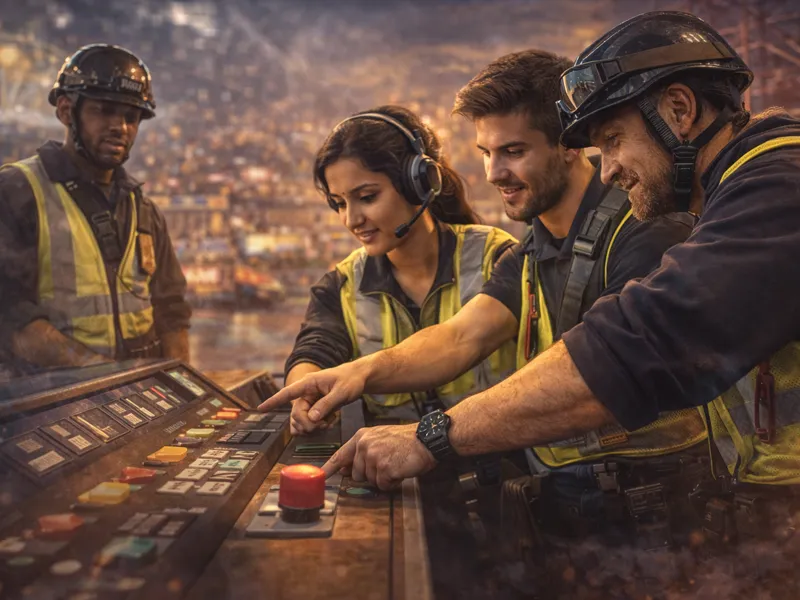
In the leisure and attractions industry, safety depends not on policies alone—but on people consistently making the right decisions in real-world, high-pressure situations. As operations grow more complex and workforces become increasingly diverse and seasonal, traditional training models are being put to the test.

Many operators today face a critical question: How do we move beyond “training completed” to genuine, measurable competence on the ground?

In this MENALAC Health, Safety & Environment (HSE) webinar, we explore how the industry can strengthen safety assurance by rethinking how competence is built, assessed, and sustained across ride operations, maintenance, emergency response, and frontline guest interaction.

The session will examine common challenges such as inconsistent training delivery, language barriers, limited visibility of skills readiness, and the gap between classroom learning and real-world performance. Drawing on global best practices and industry experience, the webinar will outline modern approaches to competency development that support safer behaviours, regulatory confidence, and stronger safety cultures.

Designed as an educational, solution-oriented session, this webinar will equip operators with practical insights they can apply across parks, FECs, and attractions of all sizes.

KEY TAKEAWAYS

By attending this webinar, you will learn:

  • Why traditional training alone often fails to deliver consistent safety outcomes
  • The difference between training attendance and demonstrated competence
  • How scenario-based learning improves real-world decision-making under pressure
  • The role of multilingual and inclusive training in reducing human-factor risks
  • How data and skills visibility strengthen safety assurance and compliance readiness
  • Practical ways to manage competence across seasonal, high-turnover workforces
  • How stronger competency frameworks contribute to better safety culture and guest trust

HOW THIS BENEFITS YOU (THE ATTENDEES):

  • Improve frontline safety behaviours without adding operational complexity
  • Reduce risk arising from inconsistent skills and experience levels
  • Gain clearer visibility of workforce readiness and capability gaps
  • Strengthen confidence with regulators, insurers, and internal stakeholders
  • Support safer operations while maintaining efficiency and scalability
  • Take away actionable ideas that can be adapted to your existing HSE systems


SPEAKER INTRODUCTION

Christopher Napier is a senior safety and workforce development professional with over 15 years of international experience across the leisure, amusement, and high-risk operational sectors.

Having worked extensively across the UK, Middle East, Europe, and the United States, Chris has led large-scale training, competency development, and safety strategy initiatives supporting ride operations, maintenance teams, emergency response units, and leadership groups.

He currently serves as Vice-Chair of the MENALAC Health & Safety Committee and is an active contributor to international safety and education initiatives, including work aligned with global industry standards. Chris is also a member of the NAARSO Education Committee, reflecting his ongoing commitment to advancing professional safety education worldwide.

In this webinar, Chris will share practical insights drawn from real operational environments, focusing on how attractions can strengthen safety outcomes by building competence that is measurable, repeatable, and aligned with modern industry demands.